Showing posts with label Gadgets. Show all posts

Sunday, December 7, 2014

How to choose a new phone

Gadgets


How to choose a new phone 

Getting a new phone? Here are some things to consider before hitting the local stores.


By Anick Jesdanun | Associated Press


Now is a good time to get a smartphone. The latest devices hit shelves in time for the holiday shopping season, and there’s likely to be a lull in new releases until probably March or April in 2015. So why wait?

Here are some things to consider before hitting stores. If you’re upgrading from an older model, you can skip the first part aimed at first-time smartphone buyers.


Do you need a smartphone?

Maybe you’ve been doing fine with just a basic cellphone, but many people who get smartphones discover things they never thought they could do. You can install a museum’s app to get a map or learn about the current exhibits, or you can catch up on e-books with a reading app. You can also check email and Facebook more easily and take great pictures and quickly share them.

But you’ll pay more—not just for the device. Monthly fees for voice, text, and data tend to be higher compared with basic phone plans.


Which system should you pick?

This is the most important decision because it will influence your future smartphones. It’s not easy to switch once you have all your apps, contacts, and favorites on one system.

With Apple’s iOS, you can choose between a variety of iPhone models—ranging from the giant iPhone 6 Plus to the older and smaller iPhone 5s and 5c. The iPhone 6 is a good choice in between and comes with all the bells and whistles. Phones running Google’s Android operating system include even more choices from several manufacturers, including Samsung, LG, HTC, Huawei, and Sony.

Android is more flexible in the sense that phone makers can customize it to their liking, and app developers have more say in what they write for Android phones. That flexibility has led to a free-for-all environment, though. Settings and features vary so much from phone to phone that it’s tough to ask a friend or look online for help. And some Android apps won’t work with all phones.

Because Android gets too fragmented, many app developers work with iOS first. Apple is the only company that makes iOS phones, and it must approve what goes into its app store. That helps ensure quality, but it means trusting Apple to make those choices for you. One advantage of iOS is that iPhones work well with other Apple devices, including iPads and Mac computers. Android can’t pull that off because the hardware and the software aren’t as tightly integrated.

There are several other systems vying for third place. Microsoft’s Windows is the most promising, after BlackBerry tumbled from pioneer to also-ran. Windows is a good system, but it has fewer apps.


How should you pay for it?

You used to simply pay P9,000 for the best phone, and the phone company covered the remaining P21,000 or so, making up for it in higher service fees over the life of your two-year contract. Lately, phone companies have been trying to wean customers off subsidies by having customers bring used phones or pay full prices in installments. In return, you pay less in monthly service fees.

If you forgo subsidies, you generally come out ahead if you sign up for a larger data plan. The monthly discounts aren’t as big with smaller data plans, so you’re giving up more in subsidies than you get in discounts. But the installment plans have other advantages, including the ability to trade your phone in for a newer model before the typical two-year contract is up.

You can buy phones through your wireless carrier or go to a retailer. You can also find phones online. Check with your carrier first to make sure it’ll work, as networks, specifically LTE, may vary.


How much should you pay?

It might be tempting to spend a lot for the latest iPhone or Samsung Galaxy phone, but you should ask yourself whether you need all that power. This is especially so if you are paying full price. (If you’re getting a subsidized phone with a contract, then why not make the phone company pay for the best?)

There are several phones available for P10,000 or less, at contract-free prices, compared with P30,000 or so for the typical high-end phone. You’re typically giving up a better camera, a better screen, and a faster processor. But what you get in a budget phone is often good enough for such basics as email, Facebook, and even video. First-time smartphone owners will notice a huge difference over their basic phones.

Smartphone veterans might want something more, especially if the phone is their primary access to the Internet. Heavy users might even consider paying more for additional storage. Phones fill up quickly with photos and video and downloaded music.

Saturday, November 22, 2014

Nokia plots comeback with Android tablet

Gadgets


Nokia plots comeback with Android tablet


HELSINKI (AP) — Nokia is back in the fray.

Just months after selling its ailing handsets business to Microsoft, the Finnish company is planning to go back into the consumer market with a new tablet.

The former top mobile phone maker, which has a history of reinventing itself since it began as a paper maker in the 19th century, said Tuesday it will launch a 7.9-inch device early next year in China, the world's biggest market, before selling it elsewhere.

The device will be manufactured by Taiwan-based Foxconn, which makes Apple's handsets. And it will operate Android instead of the Windows software Nokia used on its cellphones when it began a partnership with Microsoft in 2011. That partnership ended unsuccessfully — in April Nokia sold its cellphones unit to Microsoft for $7.2 billion.

Sebastian Nystrom, head of at Nokia's technologies unit, described the N1 tablet as "a new beginning for Nokia."

He noted that about 80 percent of the world's mobile consumers use Android, compared with just 2.5 percent using Windows mobile devices. The aluminum-cased tablet uses Google's Android Lollipop operating system, and will retail for some $250.

For sure, it won't be an easy shift for Nokia after years of focusing on cellphones and a troubled networks operation that only recently has shown signs of improvement.

"It's pointing in the right direction, but there are some real challenges," said Neil Mawston from Strategy Analytics, near London. "It doesn't have the distribution channels that others like Samsung and Apple enjoy, and nobody is making any profits in Android tablets at the moment."

But Nokia, established in 1865, has demonstrated an ability to transform itself.

Named after the small southern Finland town where it was based, it evolved its paper making business into a rubber boots and cable maker before becoming an electronics company. Then it hit on mobile telephony that made it almost synonymous with wireless high-tech, reaching a peak of 40 percent market share in mobile phone sales worldwide in 2008.

But, after holding the No.1 spot in cellphones for 14 years, it wasn't able to meet the challenge when Apple in 2007 introduced the iPhone, and also began to lose the competition to cheaper Asian manufacturers.

After completing the sale of its mobile phone unit to Microsoft, Nokia has focused on its three, much more profitable operations: networks, HERE mapping services and software.

It is one of the few computerized roadmap providers in the world and the only one with a long history of working with automotive companies. HERE has an 80 percent market share for embedded automotive maps.

Nokia's brand was wiped out of the handset market last week, when Microsoft unveiled its first Lumia smartphone under its own brand name.

"We are pleased to bring the Nokia brand back into consumers' hands," said Nystrom, who announced the launch of the tablet in Helsinki at Slush, one of Europe's largest startup and investor events with some 10,000 participants expected over two days.

He hinted Nokia was also interested in producing an Android smartphone. That can't happen before 2016, however, as the Microsoft deal included a commitment that Nokia not enter the smartphone business before then.

"Once that is finalized we have the option to do so," Nystrom told the AP.

Nokia's share price closed up more than 3 percent at 6.41 euros in Helsinki.

Tuesday, November 4, 2014

Five Tips for Using Your Smartphone Overseas

Gadgets


Five Tips for Using Your Smartphone Overseas


Making Sure It Works and Avoiding Unexpected Bills


Are you planning to use your smartphone while traveling internationally? Here are five simple ways to ensure a straightforward experience while you’re away, and avoid nasty bill surprises when you get home.


Make Sure Your Phone Will Work in Your Destination


First, ensure that your phone will work in your intended destinations. Cell companies around the world use several different technologies and frequencies, and there’s no guarantee that your phone will work with all of them.

Check the phone’s user manual – if it supports "quad-band GSM", it should work in much of the world. If you purchased your phone from your cell company and you’re not certain if it will function overseas, contact customer support.
 
 
Most cell companies also don’t enable your account for international roaming automatically, due to the high costs that can be incurred. Once you know that your phone is capable of working in a particular destination, be sure to contact your cell company to enable roaming on your account.

More information:


Check for International Roaming Packages


Using your phone overseas can be a very costly exercise. Most cell plans don’t include any calls, texts or data when traveling internationally, and rates can be extremely high. It’s not unusual to hear of people returning from a one or two week vacation and receiving a bill of thousands of dollars for their cellphone use.

To avoid this happening to you, check to see whether your cell company has any packages designed for international use. While many such packages are still expensive compared to using your phone at home, they’re still much cheaper than "pay as you go" rates.

While T-Mobile has recently announced a limited free SMS and data plan for its US customers who travel overseas, and new roaming regulations will come into force in the European Union over the next few years, these are still, unfortunately, rare exceptions.


Find Out If It’s Unlocked


If you’d prefer to avoid roaming charges entirely, it’s possible to do so with an unlocked GSM smartphone.  With one of these, you will be able to remove your existing cell company’s SIM card and replace it with one from a local company in your destination.

Depending on where in the world you’re going, the card itself will cost a few dollars, while $5-$20 worth of credit should give you enough calls, texts and data to last a couple of weeks.

Unfortunately, if you didn’t pay full price for your phone, it’s unlikely to be unlocked. There are exceptions (recent iPhones purchased from Verizon have an unlocked SIM card slot for international use, for example), but they are few and far between.

If your phone is locked, it’s worth contacting your cell company to see if it will unlock it for you (especially if the phone is no longer under contract). Bear in mind, however, that the company usually has no obligation to do so.

There are unofficial methods of unlocking certain models of smartphone, but these are done at your own risk and should be considered a last resort.


Turn Off Cell Data (and Use Wi-Fi Instead)


If your smartphone isn’t unlocked and you don’t have a good international roaming package, there are still ways to avoid spending a fortune. The most obvious is to turn off cellular data before you board the plane to your destination, and leave it that way until you get home. At rates of up to $20/MB, you could have spent hundreds of dollars downloading email before you’ve even got to the baggage carousel.

Instead, limit yourself to using Wi-Fi while you’re away. Most accommodation now includes wireless Internet – free or at a relatively small cost  while cafes and restaurants can fill in the gaps when you’re on the go. It’s not quite as convenient as having cellular data at your fingertips, but it’s a whole lot cheaper.


Use Google Voice or Skype Instead of Making Calls


Finally, whether you’re using Wi-Fi or cellular data, consider using smartphone apps like Skype or Google Voice when you need to stay in touch with friends and family back home. Rather than paying high international calling and text rates, these apps let you talk and send texts for free or cheap to anybody around the world.

Using Google Voice lets you call phones and send texts in the US or Canada at no cost, and any number outside that for a small fee. Skype also has low per-minute rates for calls and texts, and both apps let you call other users of the service for free no matter where they are.


With a little preparation, heading overseas with your smartphone doesn’t have to be a difficult or expensive proposition. Have fun!

Sunday, November 2, 2014

10 Great Apps for Him

Gadgets


10 Great Apps for Him


By
Edinburgh Local Expert


What every guy should have on his smartphone

A man's smartphone can serve as a loyal wingman when it’s loaded with the right apps. This list will help any man be the best he can be


                                                                                          Photo courtesy of bevangoldswain/iStock


1. EverNote

With this app, you don't need a realiable memory.


2. Cool Guy

Learn how to mix and match your wardrobe.


3. Mixology

Try recipes for tasty cocktails to get the party going.


4. ESPN ScoreCenter

Get the latest sports scores and news on your phone.


5. Abs Workout

Work on developing a perfect six pack.


6. The Pit Pal BBQ App

Master the grill and deliver unforgettable flavor.


7. WolframAlpha

Makes him look like he knows everything.


8. Spotify

Discover new music and playlists for every occasion.


9. Waze

Beat the traffic and find the cheapest gas.


10. Badoo

Find new friends or that special someone.

Friday, July 18, 2014

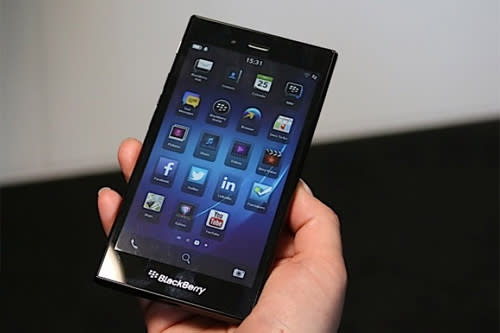
BlackBerry Philippines signals comeback with Z3 launch

Gadgets


BlackBerry Philippines signals comeback with Z3 launch

 https://ph.news.yahoo.com

And we were just about to do a "What happened to BlackBerry Philippines?" piece. Imagine our surprise when just a few minutes ago, we received a message that signifies its return to the country: "We are proud to launch the local availability of the BlackBerry Z3."


                      https://s.yimg.com/bt/api/res/1.2/z.5wLO4TS86CCeZ6mXRjvA--/YXBwaWQ9eW5ld3M7Zmk9aW5zZXQ7aD00MjA7cT03NTt3PTYzMA--/http://media.zenfs.com/pt_BR/News/AFP/f03644edf7017a223e197c70c6be2d55e199f884.jpg


The announcement of the smartphone at the Mobile World Congress in Barcelona, Spain, signaled two firsts. The BlackBerry Z3 is the first handset that the company launched since new CEO John Chen took over in November 2013. It is also the first fruit of of BlackBerry's plan to outsource its manufacturing to Foxconn, which also makes devices for other brands.

                                            
                         https://s2.yimg.com/bt/api/res/1.2/Lnry0S4LbbJmkx2sAg5Iyw--/YXBwaWQ9eW5ld3M7Zmk9aW5zZXQ7aD0zMzM7cT03NTt3PTUwMA--/http://media.zenfs.com/vi_VN/News/ngoisao/ba1-2318-1393388234-20140226-043620-226.jpg

The BlackBerry Z3 is a 5-inch smartphone that runs BlackBerry 10.2.1. It is powered by a 1.2GHz dual-core Qualcomm Snapdragon 400 chipset. The handset will probably cost around P10,000, if we are to base it on the Z3's $191 price in Indonesia, where it was first made available. It will be launched in the Philippines on July 22. 

                           https://s1.yimg.com/bt/api/res/1.2/Pu0b.0jjYncdbX0O2lKHYQ--/YXBwaWQ9eW5ld3M7Zmk9aW5zZXQ7aD0zOTM7cT03NTt3PTU5MA--/http://media.zenfs.com/zh-Hant-HK/News/Unwire.hk/P7030871-590x393.jpg


Specs of the BlackBerry Z3 (Price and availability in the Philippines: TBA on July 22, 2014):


1.2GHz dual-core Snapdragon 400 chipset
Adreno 305 GPU
1.5GB RAM
8GB internal storage
microSD card slot (up to 32GB)
5-inch display (540 x 960 resolution; 220ppi)
5-megapixel rear camera with LED flash
1.1-megapixel front camera
Non-removable 2,500mAh battery
BlackBerry OS 10.2.1


Wednesday, July 2, 2014

CloudPad 800w: The First Local Intel-powered Tablet

Gadgets


CloudPad 800w: The First Local Intel-powered Tablet


A fast-rising star in the telecommunications industry in the Philippines, CloudFone is a company that is recognized for introducing many great innovations in the technology market. Revolutionizing the technological scene, CloudFone takes pride in their innovative products such as the CloudFone Excite 450q, which was launched as the most affordable quad-core, the CloudFone Thrill 430x which holds up to three times more battery power than the average smartphone, the CloudFone Thrill 400qx that features unique interchangeable batteries and back covers to suit users’ diverse lifestyle, and the list goes on.

These amazing innovations do not seem to go unnoticed as the company has appeared to catch the eye of the country’s most well-known and trusted brands, resulting in wonderful partnerships for the telecommunications company. These partnerships include trusted companies, such as ABS-CBN and Globe Telecom. As the company meets the New Year, it opens it with a blast, introducing a new partnership with another big name in the industry: Intel.

Intel has long been known to be the one of the world’s largest and highest-valued semiconductor chipmakers. Having that blue and white “Intel inside” logo is not just a symbol of the authenticity of a device, but an assurance of the quality and reliability that product offers. As Intel ventures into tablets, it partners up with CloudFone to give you the first local Intel-powered tablet: the CloudPad 800w.

Built for modern workspaces, the CloudPad 800w takes the sharp capabilities of a mobile device and the strength of a PC. Powered by an Intel® Atom Z2580 2.0 Ghz processor, the device boasts unbridled stamina to enable continuous use of web and installed applications while saving energy. The newest addition to CloudFone’s mobile portfolio also becomes a cost-effective solution to multitasking needs with connectivity and compatibility features amplified by Intel’s solid processing power.

This tablet surely packs a punch with the amazing specs and features it houses.Capturing moments, documenting memories, and staying connected are a delight with its 5MP rear camera along with a 2MP Front Camera. Managing activities and switching from one app to another is also not a problem as this tablet runs on the latest Android 4.2 Jelly Bean software, a 1 GB worth of RAM, and a powerful 2.0 GHz Dual Core Intel processor. With its WiFi capability, the CloudPad 800w enables its users to stay connected as they enjoy endless browsing, gaming, and chatting on its beautiful and responsive 7.85” XGA touchscreen. All the photos, music, videos, games, and apps are also not a worry as the CloudPad 800w offers a generous internal memory of 32GB, allowing more room for storage. Inside and outside, the CloudPad 800w is the embodiment of the line, “Great Tablets Have Intel Inside.”

At P8,999, this tablet will no doubt be a product to watch out for. The CloudPad 800w is a step towards progress, and just a glimpse of what’s yet to come as CloudFone and Intel continue on the path of producing truly great tablets. With more beautiful partnerships, CloudFone will continue to captivate their consumers and partners alike with innovations like no other. It’s no doubt that the country’s leading brands trust CloudFone, and surely, they’re trusted for a reason.

“We continue to see a growing local market for Intel-powered tablets & phones that not only extend a great computing experience but also stunning graphics, increased responsiveness, and great battery life. Our exciting new partnership with CloudFone will bring a new wave of devices that extend these performance abilities to the reaches of the broader Philippines customer base and even organizations who value mobility and functionality at mid-price levels,” said Intel Philippines Country Manager Calum Chisholm.

2013 has been a year full of technological advancements and discoveries for everyone, and with CloudFone stepping up the game with stronger allies, 2014 looks to be even more promising.

The CloudPad 800w is now available in all CloudFone stores and kiosks nationwide.

Model Number CloudPad 800w
Commercial Name CloudPad 800w
Colors available White
SRP P8,999.00
Product Specs
Network
Display type XGA touchscreen
Size 7.85"
SIM none
Primary Camera 5 MP
Secondary Camera 2 MP
Video Yes
Operating System Android
OS Version v4.2  Jellybean
Connectivity WiFi 802.11b/g/n, BT v2.1
CPU 2.0GHz, dual-core, Intel Z2580
ROM 32GB
RAM 1GB
External Memory microSD, up to 32GB
Battery Li-Po 4600mAh
Stand-by Up to 300 hours

Tuesday, July 1, 2014

Is Samsung's latest phablet the answer to falling tablet sales?

Gadgets


The company has just filed documents with the FCC detailing a new phone with a 720p resolution, a quad-core processor and an 8-megapixel back-side camera.

So far, so normal, but things start to get interesting when the display is detailed: the screen is a pocket-bursting, small-bag-requiring 7 inches from corner to corner. In other words, it's a tablet that makes phonecalls.

Samsung has form in this area. Last year it launched the Mega mid-level handset with a huge 6.3-inch display and there's every chance that the new handset, currently seeking approval in the US, is a bigger, better -- but mostly bigger -- 2014 model.

The natural reflex when seeing something like this is to ask "who would want a 7-inch phone?" but, according to new data from IDC, the answer is a host of consumers around the world who only a year ago would have bought a tablet instead.

The research firm has this week lowered its initial forecast for tablet sales for 2014 from 260.9 million devices to 245.4 million and said that one of the reasons for doing so is the continuing growth in demand for phablets and how the devices are attracting buyers who would have gone for a 7-inch tablet.

"Two major issues are causing the tablet market to slow down. First, consumers are keeping their tablets, especially higher-cost models from major vendors, far longer than originally anticipated. And when they do buy a new one they are often passing their existing tablet off to another member of the family," said Tom Mainelli, Program Vice President, Devices & Displays at IDC. "Second, the rise of phablets -- smartphones with 5.5-inch and larger screens -- are causing many people to second-guess tablet purchases as the larger screens on these phones are often adequate for tasks once reserved for tablets."

At the moment, tablet manufacturers are focusing their efforts on the 7-inch device segment; after all, 55% of tablets sold in 3013 fell into this category. However, over the same period, IDC claims that phablet share of the smartphone market also doubled (30 million handsets or 10% of the overall market) and 2014 will see more consumers turning to oversized handsets in favor of smaller tablets.

IDC's figures appear to mesh with those from fellow research and analytics firm Canalys, published earlier this month, which highlight that 34% of all smartphones shipped over the first quarter did so with a display of 5 inches or greater.

Canalys's data shows that 22% of phones shipped had a 5- to 5.4-inch display and 10% a 5.5- to 5.9-inch display, and the final 2% was made up by handsets that are closer to tablets than phones, with screens measuring 6 inches or more form corner to corner.

Although demand for bigger phones is strongest in Asia (43% of 5-inch+ phones are shipped to the continent), a bigger screen is becoming a standard feature on flagship handsets. Nearly half (47%) of handsets that would retail for $500 or more off contract -- so everything from a Samsung Galaxy S5 to a Sony Xperia Z1 -- boast a display measuring 5 inches or more. The remaining 53% of phones in this category are iPhones. And the rumors are that Apple is also getting ready to launch a phone with a bigger screen to address this growing competition.

In terms of the tablet market, IDC believes that this increased competition will result in companies refocusing their attention on bigger devices with 9-to-11-inch displays and on 2-in-1 devices, such as the latest Microsoft Surface Pro 3, that are easier to differentiate when trying to compete with smartphones in terms of performance, features and benefits.

"The shift back toward larger screens will mark a welcome sea change for most vendors as the average selling price for these devices will remain roughly 50 percent higher than the average sub-8-inch device," said Jitesh Ubrani, Research Analyst, Worldwide Quarterly Tablet Tracker. "Microsoft is also expected to benefit from this shift as the share for Windows-based devices is expected to double between now and 2018."